
Climate change is not a far-off thing anymore; it is a day-to-day experience in terms of weather, food, health and ecosystem. Factories, cars, and energy generation are frequently blamed, but we tend to ignore one potent source that is, our diets. How we produce, distribute, and eat our food is a major driver of climate change. This emerging consciousness has resulted in a new trend called climate-changing eating, a shift to actively protective food choices.
We discuss in this blog the consequences of food and the environment of the food, what a climate-friendly diet is, and easy ways you can make your meal a solution.
What Is Climate-Changing Eating?
Climate-changing eating is the type of eating that has smaller greenhouse gas emissions, saves natural resources, and supports sustainable agriculture. It is regarding the decision of eating foods which are healthier for human health as well as for the environment.
There is a carbon footprint of every food item, which is the total quantity of greenhouse gases that is emitted during the production, processing, transportation, and storage of a food item. We can reduce our personal impact on climate change a lot by eating low-impact foods.
How Food Contributes to Climate Change?
The Food and Agriculture Organisation estimates that the global food system contributes to greenhouse gas emissions produced by human beings about one-third. These emissions come from:
- Raising of cattle (methane)
- Clearing land for farming and animal husbandry.
- Fertilisers and pesticides
- Transporting and cooling food
- Wasteful food in landfills
Some of the biggest contributors include meat and dairy, and particularly beef. It takes tremendous quantities of water, feed, and land to produce one kilogram of beef and massive quantities of methane, which is far more powerful than carbon dioxide.
The reason why our eating patterns are forced to change
The Intergovernmental Panel on Climate Change has repeated that the goals for global warming cannot be met without profound changes in food systems. As the world’s population grows, food will be sought after, and it will place greater stress on land, water, and the climate.
Eating for climate change is nothing like dieting or getting rid of everything you love to eat, but it’s really a question of balance, awareness, and making smarter choices.
Basic tenets of climate-friendly eating.
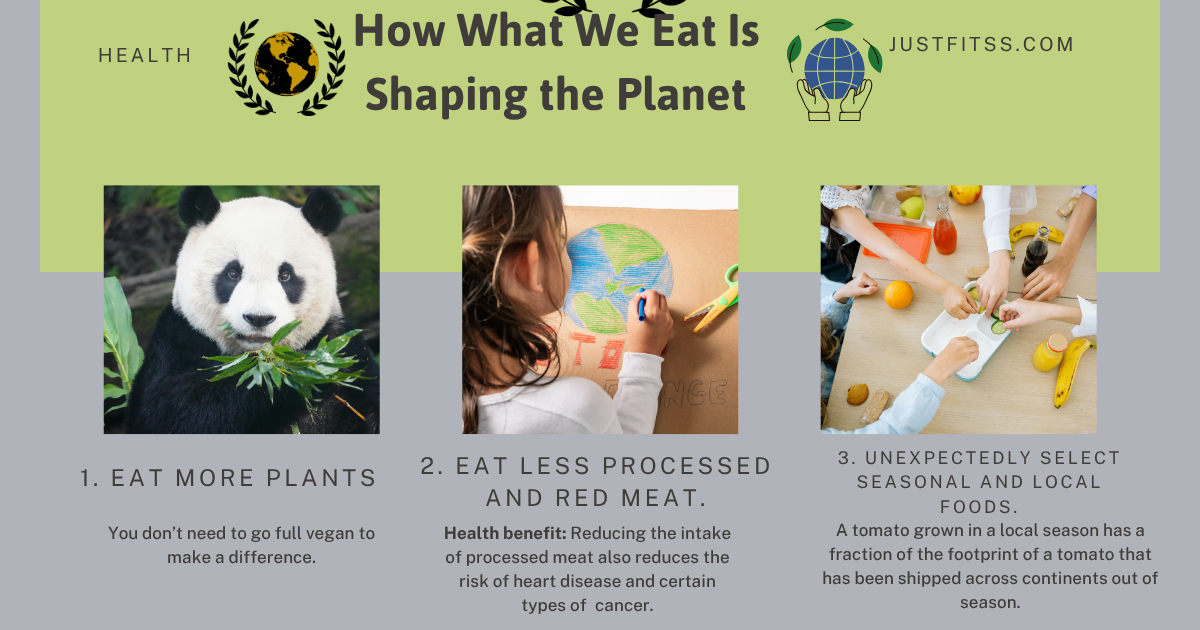
1. Eat More Plants
Humans need to consume plants at some point in the food chain, whether directly as vegetables and fruits, or indirectly by feeding plants to animals and then consuming them.
Animal products require significant resources: a diet high in plants:
- Produces fewer emissions
- Reduces deforestation
- uses less water
- Supports biodiversity
You don’t need to go full vegan to make a difference. Even going flexitarian or Meatless Monday can be a big help in reducing your carbon footprint.
2. Eat Less Processed and Red Meat.
Beef and lamb have the largest environmental impact of all foods. Red meat can be substituted for chicken, fish, or pulses to help alleviate:
- Methane emissions
- Land degradation
- Water pollution
Health benefit: Reducing the intake of processed meat also reduces the risk of heart disease and certain types of cancer.
3. Unexpectedly Select Seasonal and Local Foods.
Long-distance food must be transported and kept cold using fuel. Consumption of local and in-season food:
- Cuts transport emissions
- Supports local farmers
- Guarantees healthier and fresher foods.
A tomato grown in a local season has a fraction of the footprint of a tomato that has been shipped across continents out of season.
4. Combat Food Waste
Roughly 75 per cent of all food in the world is wasted. If you throw away food, you’re also wasting all the resources that went into producing it.
To reduce food waste:
- Plan your meals
- Store food properly
- Get creative with your leftovers!
- Only buy what you need.
5. Choose packaging with a low environmental impact.
Plastic pollution contributes to climate change and harms animals. Whenever possible:
- Select bulky or least packaged food.
- Americans use reusable bags and reusable containers.
- Avoid single-use plastics
It is not only food that makes it sustainable, but also the whole life cycle of what we purchase.
Without sick leave, workers will find it hard to manage their illnesses effectively, as is the case in Climate-Changing Eating.
Climate-friendly diets have a potent benefit of three, as follows:
Environmental Benefits
Reduce the emission of greenhouse gases.
- Less deforestation
- Cleaner air and water
- Healthier soil
Health Benefits
Discounted risk of heart disease.
- Better digestion
- Stronger immune system
- Healthy weight management
Economic Benefits
- Lower grocery bills by eating less meat.
- Support for local economies
- Decreased expenditures on healthcare in the long term.
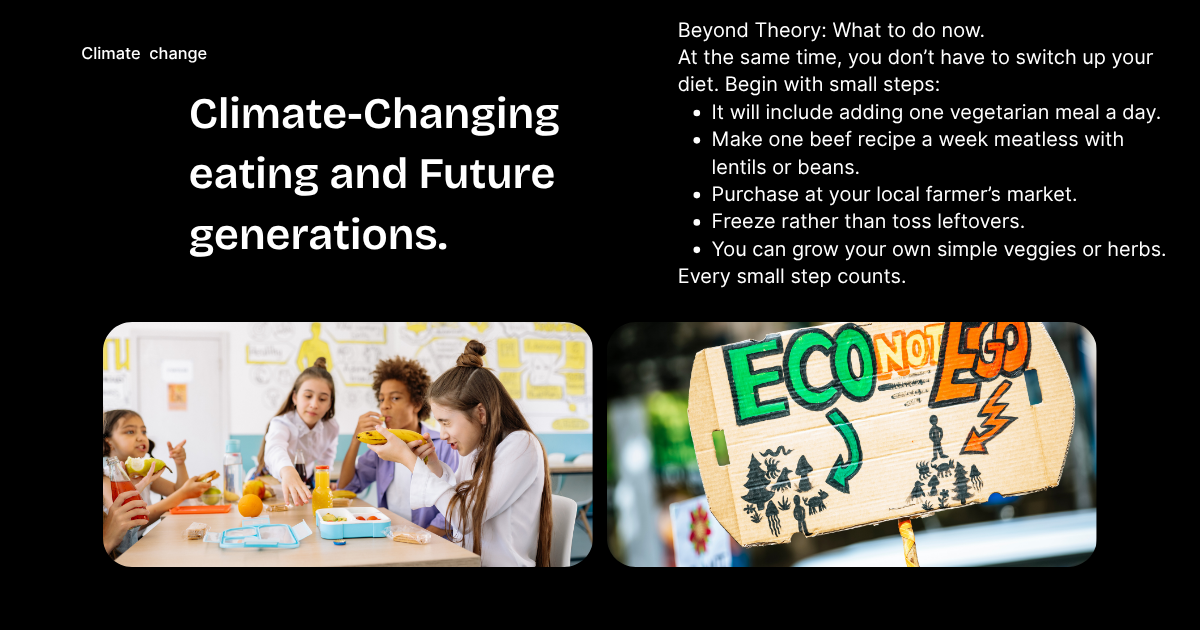
Beyond Theory: What to do now.
At the same time, you don’t have to switch up your diet. Begin with small steps:
- It will include adding one vegetarian meal a day.
- Make one beef recipe a week meatless with lentils or beans.
- Purchase at your local farmer’s market.
- Freeze rather than toss leftovers.
- You can grow your own simple veggies or herbs.
Every small step counts.
Climate-Changing eating and Future generations.
Depending on the food choices we make today, the next generations of the world will have clean air, a healthy climate, productive soils, and access to food. With every one of our diets, we decide individually whether to protect our environment, and therefore the health and well-being of our society and our planet.
Final Thoughts
Eating climate change is not fashionable – it is a needed change in attitude and habit. Food is a very personal, cultural and emotional practice, but it is also a great climate solution. An individual meal at a time, by purchasing additional plants, generating less waste, local eating, and sustainable agriculture, you join the global movement in the fight against climate change.
It is not only your plate that is feeding you.
It is shaping the planet.
FAQs
1. What is climate-changing eating?
Climate-changing eating is a practice of selection that considers the impact of food production and its contribution to greenhouse gas emissions, natural resource depletion, and environmental sustainability implications.
2. What impact does food waste have on climate change?
Food waste releases methane. This is a very potent greenhouse gas, which is generated as food waste breaks down under anaerobic conditions in landfills. It also represents wasted water, land, and energy used to grow the food.

1 Comment
Atiya
“This didn’t feel preachy. That’s rare for climate food blogs. You just laid out the facts and let me sit with them. I’m sitting. And I’m going to make one change this week. That’s all any of us can do.”