Comprehending Childhood Obesity and Teenage Obesity
Child and adolescent obesity is a growing global health problem. An unhealthy diet, a lack of physical activity, and increased screen time are among the main reasons. The World Health Organisation (WHO) has stated that the prevalence of overweight among children and adolescents aged 5–19 has increased substantially over the past four decades.
Obesity is not just a physical health issue, but it can also affect children’s mental health, confidence, and overall quality of life. It can lead to diabetes, heart disease, and even affect your self-esteem. “That is why it is important to start following a balanced, nutrient-rich diet from a young age, as it helps develop lifelong healthy habits.”
The Significance of a Balanced Diet -
A healthy diet for overweight children and teenagers isn’t about severe calorie cutting or meal skipping. Instead, it is about “balance, moderation, and nourishment.
Foods that you should limit or avoid
Some foods cause excessive fat gain and malnutrition. Gradually cutting back on those can make a big difference without making kids feel deprived.
Avoid or limit:
Sugary drinks: Soda, energy drinks, and packaged juices often contain hidden sugars. Serve water or fresh fruit-water instead.
Fast food and fried snacks: They are high in unhealthy fats and calories, and low in nutritional value.
Processed carbohydrates: processed carbohydrates, such as white bread, cake, and crisps, spike your blood sugar and lead you to overeating.
Processed food: Sausages, frozen nuggets, instant noodles. These tend to be high in salt and preservatives.
Parents can exchange junk snacks for the healthier options, such as air-popped popcorn, yogurt, or pieces of fruit.
Smart Eating Habits for a Lifetime of Success
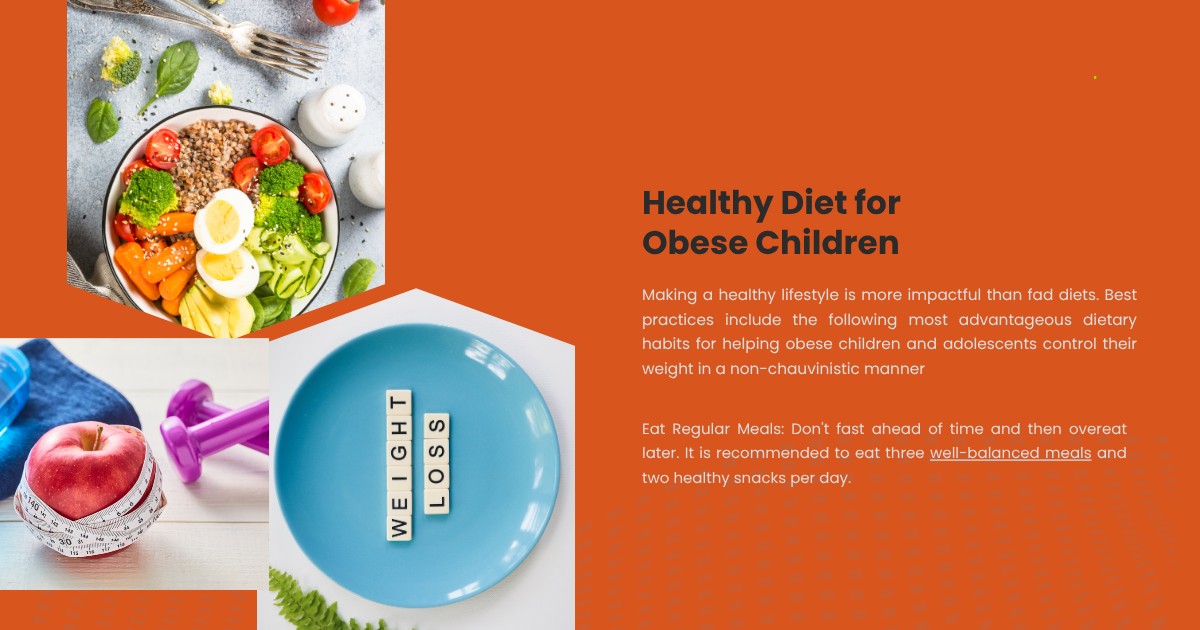
Making a healthy lifestyle is more effective than following short-term fad diets. Best practices include the following most advantageous dietary habits for helping obese children and adolescents control their weight in a non-chauvinistic manner:
Eat Regular Meals: Don’t fast ahead of time and then overeat later. It is recommended to eat three well-balanced meals and two healthy snacks per day.
Practice Portion Control: Teach your children about portion control by eating manageable portions. Using smaller plates can help.
No eating in front of the TV: Unconscious eating while watching TV or playing video games has been linked to higher calorie intake.
Family meals: We make better food choices and are less hungry when we share a meal at the table.
Keep in mind: Parents and caregivers must set a positive example; children copy their adults. Do what the adults do, they see.
Importance of Physical Activity
Physical activity plays a vital role in maintaining a healthy weight. Urge kids to try different activities — dancing, swimming, cycling, and walking the dog. Teens might group activities or work out at the gym.
Strive to get at least 60 minutes of physical activity each day, but don’t make it a “chore.” children more likely to do continuous physical activity when it becomes enjoyable.
Family Support and Emotional Support
Obesity may affect a child’s self-esteem and mental health. Parents’ behavior should be kind and gentle, and avoid comparisons with other children. Celebrate milestones such as opting for fruit instead of chips or walking rather than taking the bus.

Professional guidance from a pediatrician or registered dietitian
Every child has different nutritional requirements, workout levels, and body needs. A pediatrician or registered dietitian is the right person to make a diet chart. They can also run tests for underlying causes, like hormone imbalances, and tell you how many calories and nutrients your child needs to grow.
End
Helping obese children and teenagers to get a healthier weight requires progress, not perfection. Eating a balanced diet, exercising regularly, and having a helpful family environment can improve your mental and physical health and long-term wellness.
FAQs
1. What is the best diet for overweight teens?
The recipe for a healthy lifestyle is clear: Eat right, be physically active, and avoid tobacco. As everyone already knows, eating a healthy, balanced diet is the answer, including plenty of whole grains, lean protein, fruits and vegetables, and cutting back on processed foods and sugary drinks, and then some exercise.
2. Is it safe for overweight kids to lose weight?
Yes, but the weight reduction must be minimal. Focus on eating healthy and staying active, rather than crash dieting or cutting calories.
3. How to raise a healthy eater?
Cook with the kids, carry healthy snacks when you’re out and about, and think of balanced eating as a family habit, not a rule.